
POS
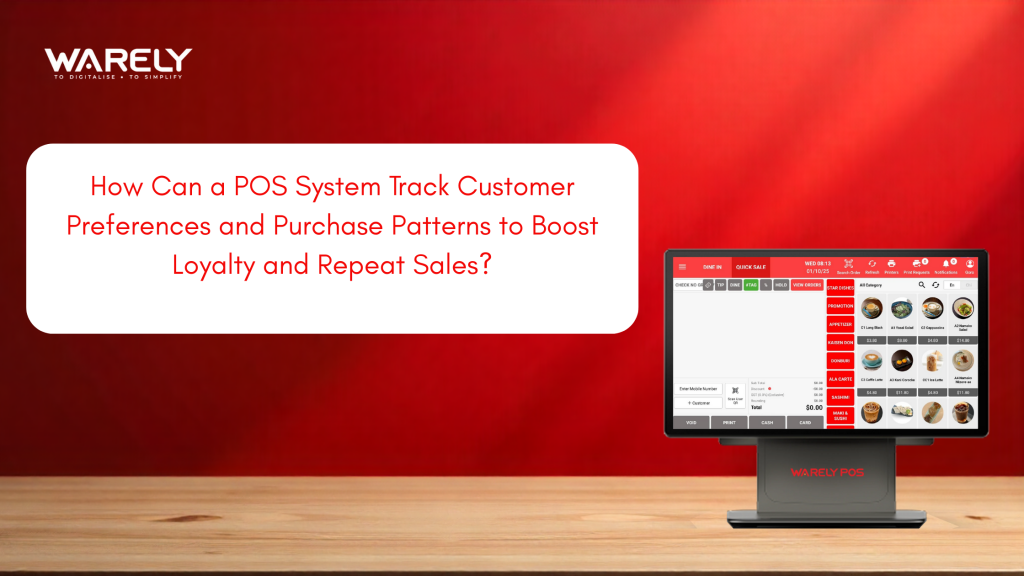
How Can a POS System Track Customer Preferences and Purchase Patterns to Boost Loyalty and Repeat Sales?
This article explains how modern POS systems transform transaction data into actionable insights by tracking customer preferences and purchase patterns. Using Warely POS as an example, it shows how businesses can personalize marketing, predict churn, and build data-driven loyalty programs that increase repeat sales and customer lifetime value.
Contents

CEO, Warely
Read »
In the current retail and hospitality climate, the difference between a one-time shopper and a lifelong brand advocate often comes down to a single factor: personalization. Customers today do not just expect quality products; they expect businesses to understand their needs, anticipate their desires, and reward them for their patronage. This is where the modern Point of Sale (POS) system transitions from a simple cash register to a sophisticated data analytics engine.
Specifically, advanced solutions like Warely POS have redefined how merchants capture, analyze, and utilize customer data. By leveraging the tracking capabilities of a robust POS, businesses can decode complex purchase patterns and transform raw numbers into actionable strategies that secure loyalty and drive repeat revenue.
From Transactions to Relationships: The Mechanics of Tracking
The foundation of tracking customer preferences lies in identifying the individual behind the transaction. Historically, this was difficult to achieve without cumbersome paperwork. However, modern systems streamline this process through digital touchpoints.
When a customer makes a purchase using Warely POS, the system initiates a profile creation process that is both non-intrusive and highly effective. Whether through a digital receipt opt-in (email or SMS), a loyalty program signup, or a payment card link, the POS creates a unique customer identity. Once this digital thread is established, every subsequent interaction is recorded against that profile.
This tracking goes beyond simple sales totals. The system records granular details:
- SKU-Level Preferences: Exactly which items, flavors, or sizes the customer prefers.
- Temporal Patterns: The specific days of the week or times of day the customer visits.
- Spending Velocity: How frequently the customer returns and their average transaction value (ATV).
Decoding Purchase Patterns for Strategic Insight
Data collection is only the first step; the true value lies in the analysis. A system like Warely POS processes historical data to reveal behavioral trends that a human manager might overlook. This analysis is crucial for moving from reactive service to proactive engagement.
Identifying Product Affinity and Cross-Selling Opportunities
By analyzing purchase patterns, the POS identifies product affinities—items that are frequently bought together. If data shows that a specific segment of customers frequently buys artisan coffee beans along with a specific brand of oat milk, the retailer can bundle these items or offer targeted promotions. Warely POS highlights these correlations, allowing staff to make data-backed recommendations at the checkout, thereby increasing the basket size while making the customer feel understood.
Predicting Churn and Re-Engagement
One of the most powerful aspects of pattern tracking is noticing when a pattern stops. If a regular customer who visits every Tuesday suddenly stops coming for three weeks, the POS flags this deviation. This allows the business to trigger an automated re-engagement campaign, perhaps sending a “We Miss You” offer via the integrated CRM. Catching these at-risk customers early is vital, as retaining an existing client is significantly more cost-effective than acquiring a new one.
Leveraging Data to Build Unshakeable Loyalty
Knowledge of customer preferences allows for the creation of a loyalty strategy that actually works. Generic “buy 10, get 1 free” cards are often forgotten or lost. Digital loyalty driven by Warely POS data is dynamic and personalized.
Hyper-Personalized Marketing
Blindly blasting a newsletter to your entire database is rarely effective. Using the preference tracking within Warely POS, businesses can segment their audience. A boutique clothing store can filter their customer list to find everyone who purchased a winter coat last year and send them an exclusive preview of this year’s scarf collection. When marketing is relevant to the customer’s actual purchase history, open rates skyrocket, and the customer perceives the brand as helpful rather than spammy.
Tiered Rewards Based on Value
Not every client makes an equal contribution to your bottom line. POS data allows you to identify your VIPs—the top 20% of customers who likely provide 80% of your revenue. With Warely POS, you can structure loyalty tiers that reward these high-value individuals with experiential perks, such as early access to sales or exclusive events. This tiered approach, grounded in hard spending data, gamifies the shopping experience and encourages lower-tier customers to increase their spending to reach the next level.
The Warely POS Advantage in Data Management
While many systems claim to offer analytics, the effectiveness of the tool depends on its usability. Warely POS is designed with the understanding that business owners are not necessarily data scientists. Complex metrics are simplified into visual dashboards via the interface.
The system centralizes customer information, ensuring that whether a client buys online or in-store, their history is unified. This omnichannel view is essential for modern reliability; it ensures that a customer never has to explain their preferences twice, regardless of how they choose to shop.
Conclusion
In an era where consumers are overwhelmed with choices, the businesses that win are those that use data to deliver a superior, personalized experience. A POS system is no longer just for processing payments; it is the engine of customer retention. By utilizing Warely POS to track preferences and analyze purchase patterns, businesses can move beyond transactional selling to build genuine, data-driven relationships. This leads to higher customer satisfaction, increased lifetime value, and a sustainable boost in repeat sales.
Looking for a complete POS solution?

Related Blogs

 Riya
Riya Read >>
 Riya
Riya Read >>
 Riya
Riya Read >>

31 Woodlands Cl,
#08-04, Woodlands Horizon,
Singapore 737855
Newsletter

Solutions
Company
Insights

 From Singapore