
pos
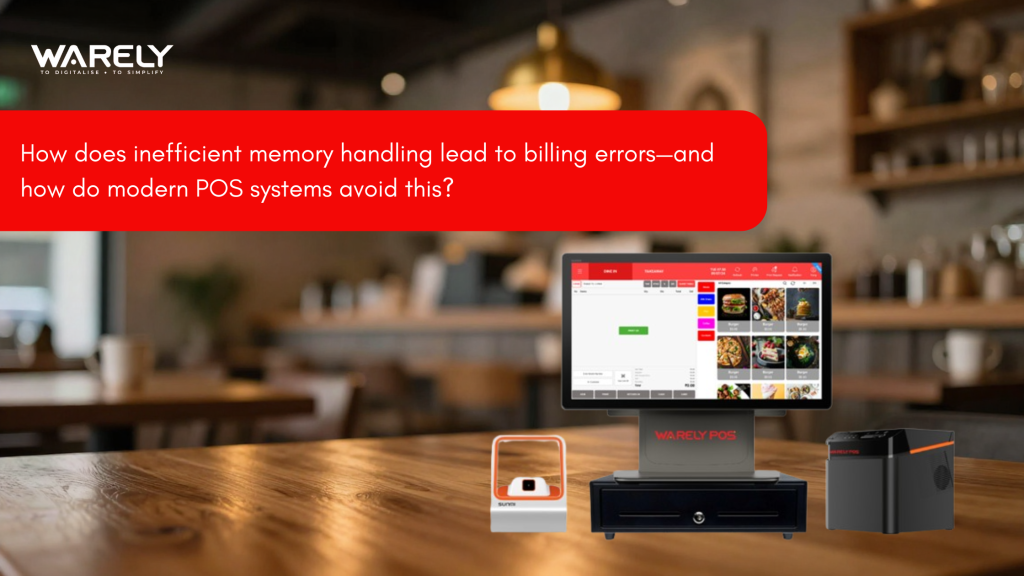
How does inefficient memory handling lead to billing errors—and how do modern POS systems avoid this?
Inefficient memory handling in POS systems can silently cause billing errors, slow transactions, and system crashes—directly impacting customer experience and revenue. When memory is poorly allocated, processes fail to execute correctly, leading to incorrect totals, duplicate charges, or lost transaction data. Modern POS systems solve these challenges with dynamic memory allocation, cloud scalability, and intelligent optimization algorithms that ensure smooth, accurate, and reliable billing operations at all times. Investing in a POS with efficient resource management is essential for error-free transactions and long-term business stability.
Contents

CEO, Warely
Read »
Business Insight: How a Singapore Restaurant Saves More Time After Switching to Warely POS
AI-Powered POS Systems in Singapore | Smarter Growth with Warely POS
In the fast-paced world of retail and hospitality, a reliable Point-of-Sale (POS) system isn’t just a convenience – it’s the heartbeat of your business. Every transaction, every inventory update, every customer interaction hinges on its smooth operation. But beneath the sleek interface and rapid processing, a silent threat can lurk, slowly eroding your POS stability: poor memory allocation.
Imagine your POS system as a bustling restaurant kitchen. Each task – taking an order, preparing a dish, handling payments – requires resources. Memory is like the available counter space, refrigerators, and ovens. If these resources aren’t managed efficiently, the kitchen becomes chaotic. Orders pile up, food spoils, and customers leave frustrated. Similarly, inefficient memory management in your POS can lead to slowdowns, crashes, and ultimately, lost sales and reputation.
The Invisible Culprit: Understanding Memory Allocation
Memory allocation is essentially how your POS system distributes its available computer memory to different applications and processes. When you open an application, it requests a certain amount of memory to run. If this allocation is haphazard or insufficient, problems arise. Think of it like trying to fit a king-size bed into a small closet – it simply won’t work, or at best, it will be a tight, inefficient squeeze.
The Ripple Effect: How Poor Allocation Impacts Stability
The consequences of poor memory allocation are far-reaching and can manifest in various ways:
- Sluggish Performance: This is often the first sign. Menus load slowly, transactions take longer, and staff members get irritated. Imagine a queue of customers growing longer by the minute because your system is struggling to process payments.
- Frequent Freezes and Crashes: When applications don’t have enough memory, they can become unstable and crash, forcing reboots and halting operations. This is akin to your kitchen staff suddenly having no counter space and dropping all their ingredients.
- Data Corruption: In extreme cases, insufficient memory can lead to errors during data processing, potentially corrupting valuable sales or inventory information. This can have serious repercussions for reporting and stock management.
- Security Vulnerabilities: While less direct, unstable systems due to poor memory allocation can sometimes create loopholes that malicious actors might exploit. A system constantly struggling to stay afloat is less resilient to external threats.
- Reduced System Lifespan: Constantly pushing a system beyond its memory limits can put undue stress on hardware, potentially shortening its operational life.
The Modern Solution: Efficient Resource Management
Thankfully, modern POS systems are equipped with sophisticated mechanisms to manage memory efficiently. These include:
- Dynamic Memory Allocation: Instead of pre-assigning fixed amounts of memory, modern systems dynamically allocate memory as needed, ensuring resources are used optimally. It’s like having a flexible kitchen layout that adjusts to the day’s demands.
- Memory Optimization Algorithms: Advanced software algorithms continuously monitor memory usage, identifying and freeing up unused memory, preventing “memory leaks” where applications hog resources they no longer need.
- Cloud-Based Architectures: Many modern POS systems leverage cloud computing, which offers scalable memory resources. This means your system can automatically access more memory during peak times and scale back during quieter periods, ensuring consistent performance without manual intervention.
- Virtualization: This technology allows a single physical server to run multiple isolated POS instances, each with its own allocated memory, maximizing hardware utilization and preventing one unstable application from affecting others.
A Deeper Dive: Warely POS and Efficient Resource Management
Let’s consider a system like Warely POS. They understand the critical role of efficient memory management in maintaining stability. By leveraging modern architectural principles, Warely aims to minimize the impact of memory allocation issues. This isn’t just about preventing crashes; it’s about ensuring every transaction is seamless, every report is accurate, and every customer experience is positive.
Furthermore, solutions like Warely often come with support for optimizing hardware, guiding businesses towards setups that complement their software’s memory management capabilities. And for businesses in Singapore, the PSG Grant offering up to 50% off for adopting solutions like Warely makes this investment even more appealing, providing access to robust and efficient systems.
Real Customer Success Stories: The Power of Stability
Consider the case of “The Daily Grind,” a popular café chain. Before upgrading their POS, they experienced frequent system freezes during peak lunch hours. “It was a nightmare,” recalls Sarah L., the owner. “Customers were waiting, lines were building, and our staff was constantly frustrated. We were losing business.”
After implementing a modern POS with superior memory management, their operations changed. “We haven’t had a single crash since,” Sarah exclaims. “Our staff can focus on assisting customers instead of troubleshooting because transactions happen so quickly. It’s made a huge difference to our bottom line and our team’s morale.” This direct impact on operational efficiency and customer satisfaction highlights the tangible benefits of a stable, well-resourced POS.
Investing in Stability: A Smart Business Decision
The stability of your POS system is not something to be overlooked. It directly impacts your operational efficiency, customer satisfaction, and ultimately, your profitability. By understanding the importance of efficient memory allocation and choosing modern systems that prioritize it, businesses can safeguard their operations and build a foundation for sustained growth.
In today’s competitive landscape, every advantage counts. A POS system that runs smoothly, reliably, and efficiently is more than just a tool; it’s a strategic asset. Investing in a system that expertly manages its resources is an investment in the future of your business, ensuring that your digital kitchen runs like a well-oiled machine, ready for any order that comes its way.
Conclusion: Future-Proofing Your Operations
The quiet battle for memory allocation plays a pivotal role in the stability of your POS system. While it may seem like a technical detail, its impact on daily operations, customer experience, and ultimately, your business’s success is profound. By embracing modern POS solutions that prioritize efficient resource management, businesses can move beyond the anxieties of system crashes and slowdowns, stepping into a future where technology empowers, rather than hinders, their growth. This focus on underlying stability ensures that your business can thrive, adapt, and consistently deliver exceptional service.
Looking for a complete POS solution?

Related Blogs

 Riya
Riya Read >>
 Riya
Riya Read >>
 Riya
Riya Read >>

31 Woodlands Cl,
#08-04, Woodlands Horizon,
Singapore 737855
Newsletter

Solutions
Company
Insights

 From Singapore