The rise of contactless payments — from mobile wallets to tap-and-go cards — is changing how customers pay and how businesses operate. Cash is no longer the primary mode of payment, and with this shift comes new challenges: long queues for cash handling, counting mistakes, theft risks, and slow reconciliation at closing time.
In a competitive retail and F&B landscape, businesses need faster, cleaner, and more accurate ways to manage transactions — and this is where modern POS (Point of Sale) systems make all the difference.
The Core Problem: Cash Handling is Slowing Businesses Down
Traditional cash processes create several operational pain points:
- Staff waste time counting and recounting cash
- Human errors lead to mismatched totals
- Managers spend hours reconciling end-of-day reports
- Theft and shrinkage become silent losses
- Queues increase when customers pay by cash
- Hygiene issues arise, especially during peak periods
- Reporting becomes unclear because cash logs aren’t tracked automatically
As contactless payments grow, relying heavily on cash makes operations messy, slow, and inefficient.
The Shift: Contactless Payments Are Taking Over
Customers today want speed, safety, and zero friction.
Tap-to-pay, Apple Pay, Google Pay, QR payments, and digital wallets have become the preferred choice — especially among younger consumers.
Businesses that embrace this shift gain faster turnover, cleaner transactions, and real-time financial visibility.
But to manage this transformation smoothly, they need a system that connects all payments smartly.
How POS Systems Reduce Cash Handling Effortlessly
1. Direct Integration With Contactless Payments
Modern POS systems accept all digital and tap-to-pay options, which naturally reduces dependency on cash.
More digital transactions = less counting, fewer errors, faster operations.
2. Automated Tracking Removes Manual Counting
Every payment — card, QR, or wallet — is automatically recorded inside the POS.
This eliminates handwritten logs, cash sheets, and manual reconciliation.
3. Reduced Theft and Cash Shrinkage
When less cash is handled, internal losses drop significantly.
POS systems track every payment, every refund, and every adjustment — leaving no room for uncertainty.
4. Faster Closing and Daily Reconciliation
End-of-day tasks that used to take 45 minutes now take less than 5.
POS automatically compiles total sales, payment breakdowns, and revenue reports without manual effort.
5. Better Hygiene and Faster Service
With fewer cash transactions, staff spend more time serving customers and less time handling notes and coins.
This results in:
- faster queues
- cleaner counters
- improved customer satisfaction
6. Real-Time Payment Insights for Smarter Decisions
Managers can instantly see:
- How many customers paid via contactless
- Which payment types are growing
- Which hours have peak digital usage
- How cash usage is declining over time
These insights help businesses plan staffing, optimise payment flows, and reduce operational pressure.
WarelyPOS: Helping Businesses Transition to a Low-Cash Future
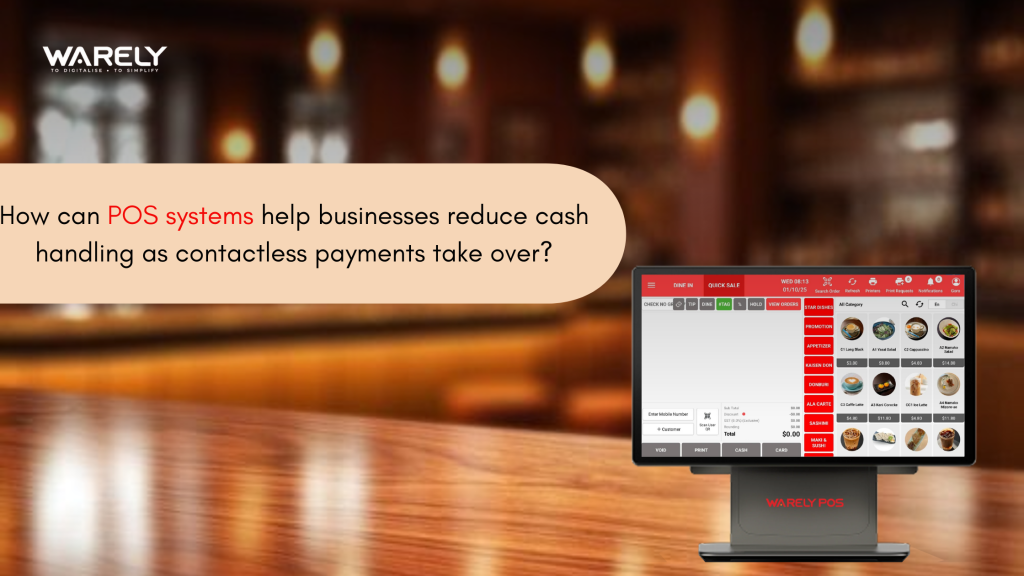
WarelyPOS is designed to help businesses operate efficiently in an increasingly cashless world. With seamless integration of digital wallets, QR payments, and tap-to-pay methods, WarelyPOS reduces the complexity of managing cash.
Businesses using WarelyPOS report:
Faster checkout speeds
Fewer errors in daily closing
Lower fraud risks
Better staff accountability
More accurate reporting
As a PSG Grant–approved POS provider, companies can save up to 50% on implementation costs — making digital transformation more accessible than ever.
Conclusion
As contactless payments take over, businesses that still rely heavily on cash will fall behind.
Modern POS systems help companies speed up service, cut cash-handling errors, reduce theft, and give cleaner financial insights — all while keeping operations efficient and future-ready.
In an increasingly digital world, embracing a smart POS system is one of the most effective ways to minimise cash handling and keep your business running smoothly.



 Riya
Riya 




 From Singapore